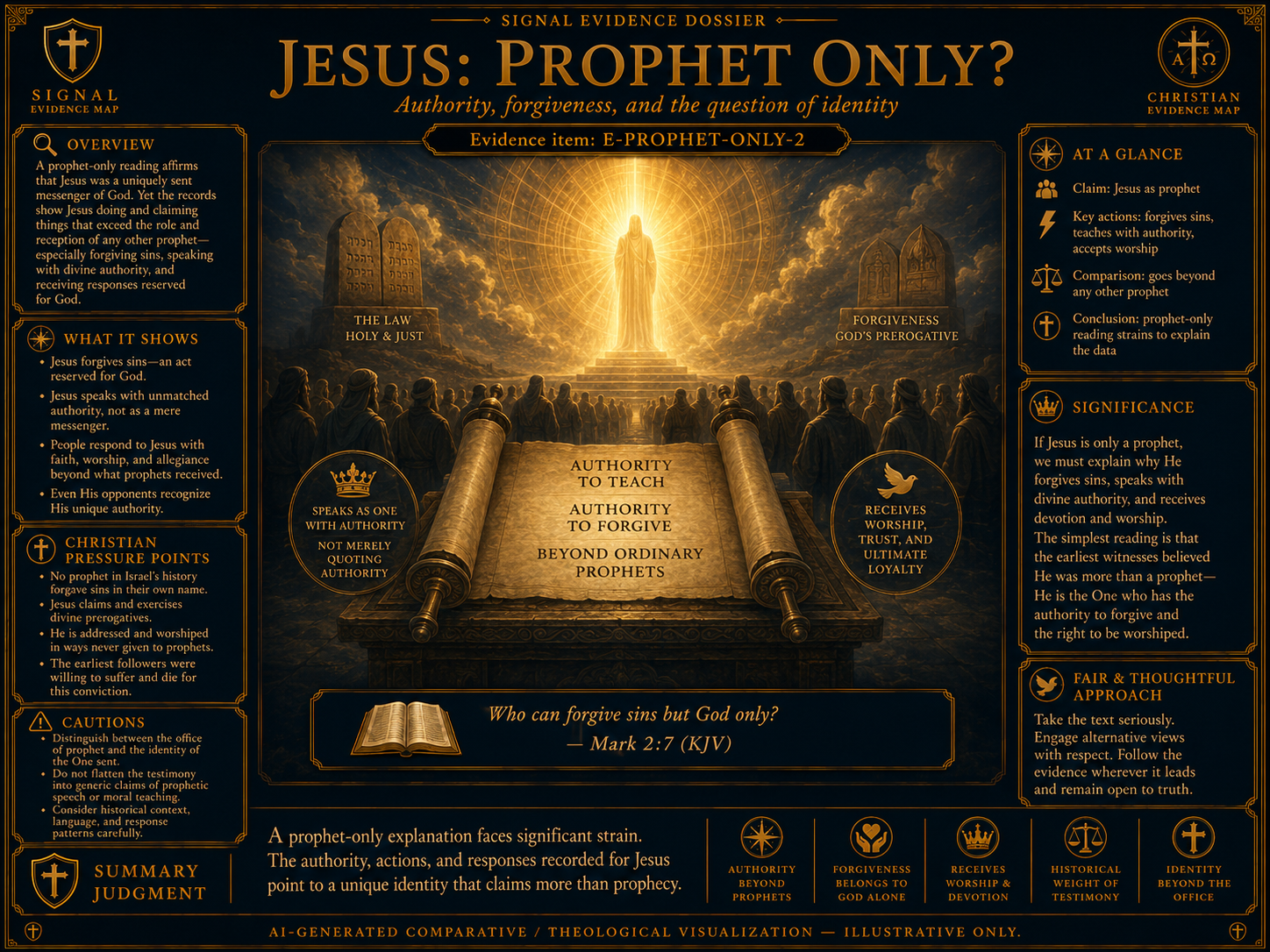
Primary Datum
Datum: several Synoptic sayings are used to argue that Jesus distinguishes Himself from God in non-divine ways.
Dependency / Cap Metadata
- dependency_cluster_id
- strict_monotheism_rival_pressure
- dependency_cluster_role
- support_layer
- dependency_cluster
- strict_monotheism_rival_pressure
- dependency_role
- support_layer
- cap_profile
- rival_pressure
- evidence_function
- rival_positive
- directness
- supporting
Counter-Pressure
- title
- The Incarnation expects humility, not a divine disguise.
- text
- Restraint sayings matter because Christianity does not teach that Jesus only pretended to be human. The Son prays, obeys, receives, suffers, and speaks from within a real mission. That is not an embarrassment to hide; it is the claim itself. The question is whether these sayings deny divine identity, or whether they belong with the wider portrait: forgiveness of sins, lordship over Sabbath, authority over judgment, command over creation, resurrection, and worship.
- path
- Start by refusing the shortcut. Do not flatten Jesus into a slogan of deity, and do not flatten Him into a mere prophet. Read the restraint texts beside the authority texts. A prophet-only reading can explain humility; it has a harder time explaining why the same Jesus stands where only God may stand.
Apologetic Note
- label
- Apologetic leverage
- title
- Scripture is strongest when context and fulfillment stay together.
- key point
- Synoptic restraint passages used in non-divine readings should not be handled like a magic verse. Good apologetics reads the original setting first, then asks why so many lines of Scripture converge on Christ.
- conversation move
- Say to a teenager: do not rip verses out of context, but do not ignore the pattern either. King, servant, temple, sacrifice, wisdom, covenant, exile, nations, and kingdom all start pointing toward Jesus.
- caveat
- Do not pretend rival readings are stupid. The Christian claim is that Christ makes the whole story cohere, not that every verse is obvious in isolation.
Scripture Passage
reference: Mark 10:18; label: Restraint text
Caveats / Notes
- Cap notes
- Capped strict-monotheism/prophet-only rival pressure under E-STRICT-UNITY-NONTRINITARIAN-ANCHOR.
- Cap profile note
- Rival and defeater pressure is capped within its own family and kept visible.
- Cluster note
- Strict-monotheism cap: supports Judaism/Islam or prophet-only readings only modestly, and is capped against overlapping Scripture/Text monotheism and non-fulfillment rows.
- Scoring note
- Prophet-only comparator row; keep modest and scoped to non-divine readings of restraint sayings.
- Governance note
- Capped under strict-unity rival-pressure family.
Machine-Readable Source
This page is generated from the public evidence mirror without recalculating or changing scores.