Primary Datum
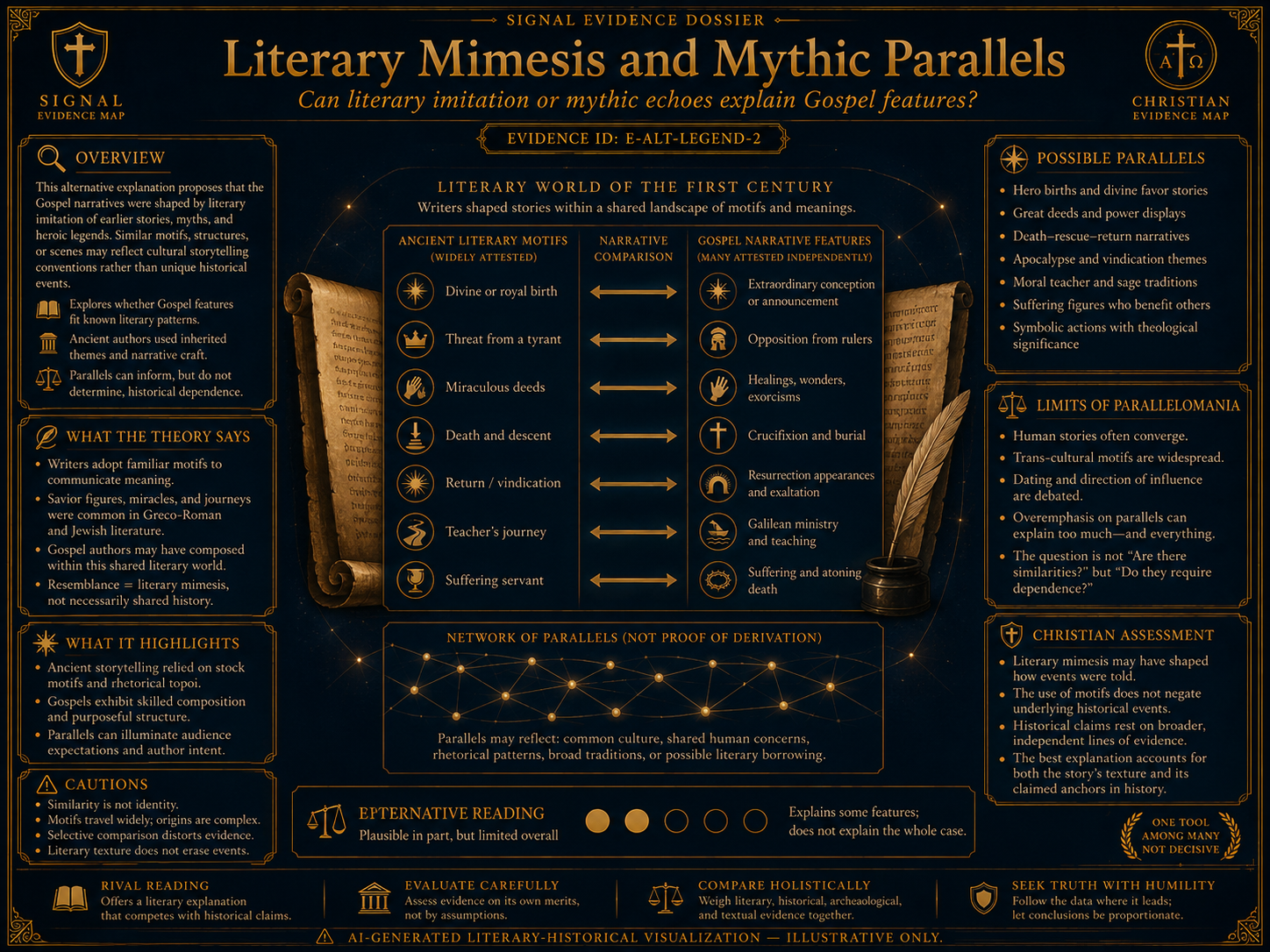
Datum: Some argue Gospel episodes reflect literary imitation of classical texts or myth types, easing legendary explanations.
Dependency / Cap Metadata
- dependency_cluster_id
- resurrection_alternative_explanations
- dependency_cluster_role
- defeater
- dependency_cluster
- resurrection_alternative_explanations
- dependency_role
- defeater
- cap_profile
- rival_pressure
- evidence_function
- defeater
- directness
- supporting
Counter-Pressure
- title
- Parallels can illuminate texts; they do not automatically explain events.
- text
- Literary parallels and mimesis arguments can be useful. The Gospels are written texts, and texts use Scripture, echoes, patterns, and theological framing. But resemblance is not causation. A mythic-parallel argument must show that the parallel actually generated the Resurrection claim, not merely that later narration uses familiar biblical or cultural language.
- path
- Ask three questions every time: chronology, causation, and reach. Did the alleged parallel predate the claim in a relevant way? Is there evidence of dependence rather than broad resemblance? Does it explain the early creed, witnesses, Paul, James, empty-tomb memory, and public proclamation? If not, it may explain literary texture while leaving the origin of Resurrection faith untouched.
Apologetic Note
- label
- Rival-pressure use
- title
- Parallels can illuminate literary shaping, but they do not prove derivation.
- key point
- This row has force because ancient authors used scriptural, cultural, and literary patterns. Some Gospel scenes may be narrated with literary artistry and theological memory.
- conversation move
- Take parallels seriously, then ask for a causal account: which texts, which communities, which direction of influence, and how the parallels explain the earliest Resurrection proclamation rather than only later narration.
- caveat
- Do not dismiss parallels out of hand. Also do not treat resemblance as automatic dependence or mythic invention.
Caveats / Notes
- Cap notes
- This row preserves Resurrection-rival pressure. Future cap diagnostics may govern overlap with sibling alternatives, but should not hide the objection or treat it as answered by default.
- Cap profile note
- Rival and defeater pressure is capped within its own family and kept visible.
- Cluster note
- Literary-mimesis alternative row. Keep modest and capped against oral-legend, textual, and resurrection-context rows.
- Scoring note
- Literary-mimesis alternative row. Keep modest and capped against oral-legend, textual, and resurrection-context rows.
Machine-Readable Source
This page is generated from the public evidence mirror without recalculating or changing scores.