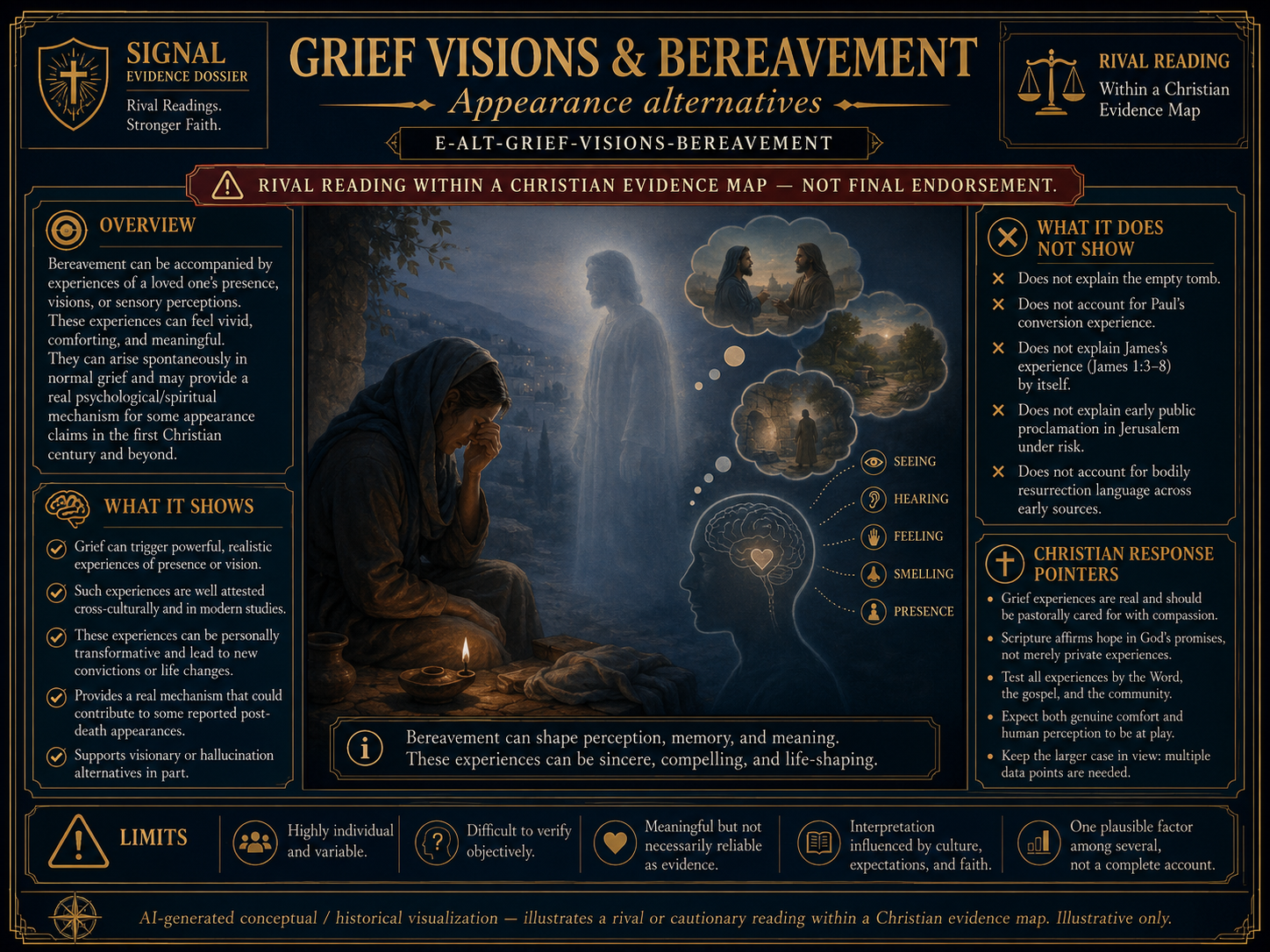
Primary Datum
Datum: Bereavement experiences, sensed presences, and grief visions provide a real mechanism for some appearance claims.
Dependency / Cap Metadata
- dependency_cluster_id
- resurrection_alternative_explanations
- dependency_cluster_role
- subcase
- dependency_cluster
- hallucination_visionary_experience
- dependency_role
- child
- cap_profile
- rival_pressure
- evidence_function
- rival_positive
- directness
- supporting
Counter-Pressure
- title
- Grief visions can explain comfort, but not the whole Easter explosion.
- text
- Bereavement visions are real and should not be dismissed. They can explain why a grieving disciple might feel that Jesus was near. But they do not easily explain the full pattern: group witness claims, public proclamation, bodily Resurrection language, empty-tomb memory, the conversion of Paul the persecutor, the conversion of James the skeptic, and the willingness to preach a crucified Messiah in Jerusalem.
- path
- Grant the psychology. Then ask for scope. Grief can produce consolation, but why did it produce a Jewish Resurrection proclamation rather than 'his spirit is with us'? Why did it persuade hostile or skeptical figures? Why did the movement anchor itself in public history rather than private healing? Bereavement visions may explain a piece of the data, but they leave too many hard edges untouched.
Apologetic Note
- label
- Rival-pressure use
- title
- Bereavement visions are real and deserve full weight.
- key point
- This row has force because grief, sensed presence, and visionary experience are well-attested human phenomena. Some appearance claims could plausibly be read through that lens.
- conversation move
- Acknowledge the mechanism without flinching. Then distinguish what it explains well from what it explains poorly: empty tomb, group/public claims, Paul, James, and early bodily Resurrection proclamation.
- caveat
- Do not imply that grief visions are fake or dishonest. The question is whether they are sufficient for the whole historical origin, not whether bereaved people can have powerful experiences.
Caveats / Notes
- Source note
- Use bereavement-vision psychology and Allison's historical cautions. This row supports visionary/hallucination alternatives for some appearance claims but does not explain empty tomb, Paul, James, or public proclamation by itself.
- Cap notes
- This row preserves bereavement-vision pressure as a subcase of visionary or psychological alternatives. Future cap diagnostics may govern overlap with hallucination and cognitive-dissonance rows, but should not hide the objection or treat it as answered by default.
- Cap profile note
- Rival and defeater pressure is capped within its own family and kept visible.
- Scoring note
- Scored as capped child under E-ALT-HALL-2.
Machine-Readable Source
This page is generated from the public evidence mirror without recalculating or changing scores.