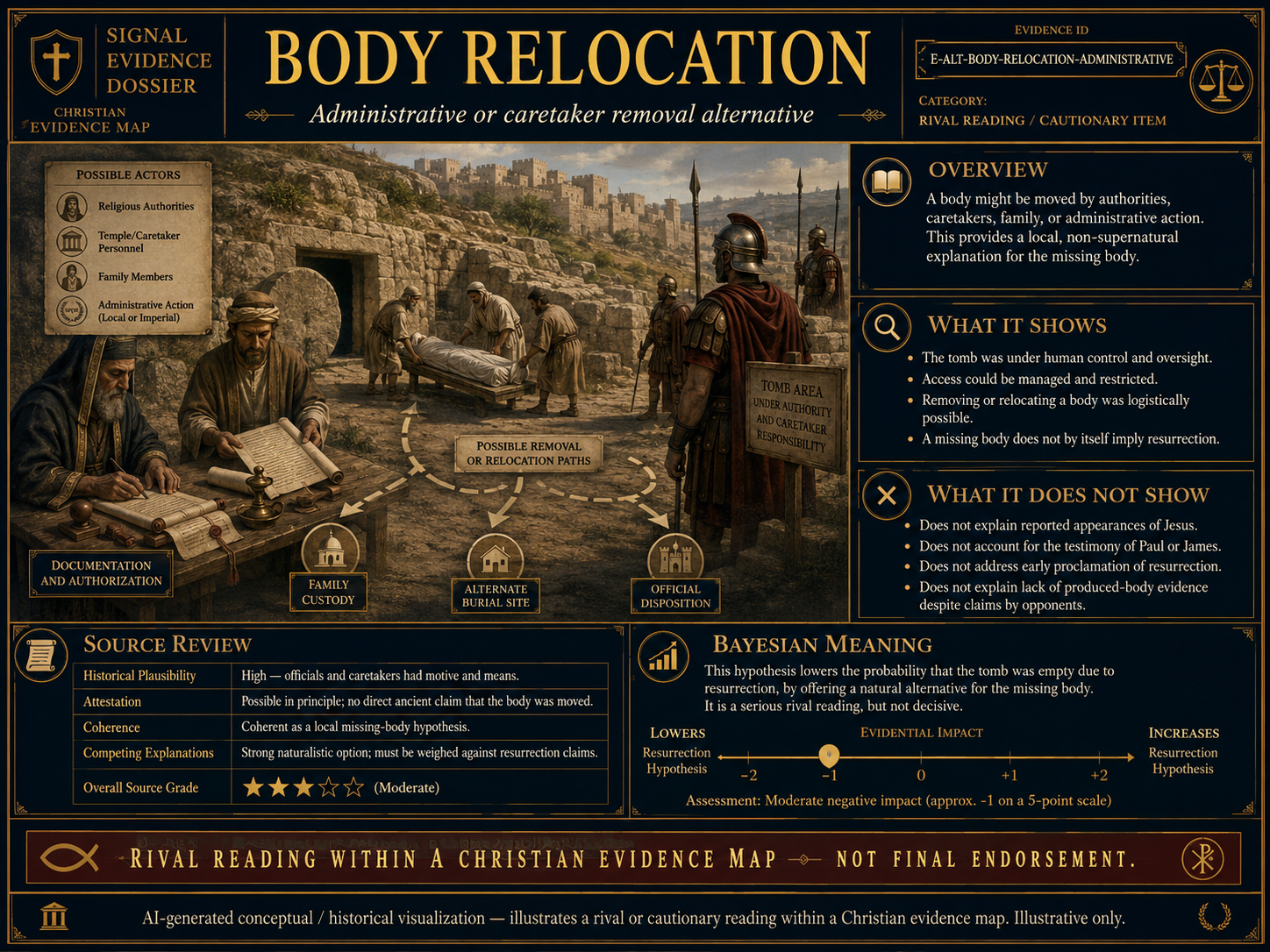
Primary Datum
Datum: A body-relocation model can locally explain a missing body or empty tomb without beginning with disciple fraud.
Dependency / Cap Metadata
- dependency_cluster_id
- resurrection_alternative_explanations
- dependency_cluster_role
- defeater
- dependency_cluster
- resurrection_alternatives
- dependency_role
- child
- cap_profile
- rival_pressure
- evidence_function
- rival_positive
- directness
- supporting
Counter-Pressure
- title
- A moved body explains a missing body, not a risen Lord.
- text
- Administrative relocation is one of the better natural alternatives because it does not require the disciples to be liars. But it only explains one slice of the evidence: a possible empty-tomb confusion. It still has to explain why the message became Resurrection rather than uncertainty, why no one produced the relocated body or a correction in Jerusalem, why appearance testimony emerged, why Paul and James changed, and why the earliest proclamation used bodily Resurrection categories rather than 'we cannot find the grave.'
- path
- Grant the strongest version first: perhaps someone moved the body without telling the disciples. Then test the reach. Does it explain the tomb only, or the whole origin of Christian Resurrection faith? Press the public-location problem: Jerusalem was the worst place to preach Resurrection if a relocated corpse could settle the matter. A moved-body theory must grow several extra explanations before it can compete with the full pattern.
Apologetic Note
- label
- Rival-pressure use
- title
- A moved-body model is a local tomb explanation, not a whole Resurrection theory.
- key point
- This row has force because administrative removal or relocation could explain a missing body without accusing the disciples of fraud. That makes it a serious local alternative for the empty-tomb lane.
- conversation move
- Use it honestly: ask what motive, timing, agents, and trace evidence the relocation account would need, and then ask whether it also explains appearances, Paul, James, bodily proclamation, and early public preaching.
- caveat
- Do not dismiss the moved-body model as silly. Also do not let it explain more than it can reach. It is strongest around tomb absence, not around the whole origin of Resurrection faith.
Scripture Passage
label: Burial and guard narrative; reference: Matthew 27:57-66, label: Body-removal counterclaim; reference: Matthew 28:11-15, label: Burial by Joseph and Nicodemus; reference: John 19:38-42, label: Empty tomb discovery; reference: John 20:1-10
Caveats / Notes
- Source note
- Keep body relocation separate from conspiracy, theft, and wrong-tomb explanations unless intentional fraud is argued.
- Cap notes
- This row preserves a distinct moved-body rival explanation. Future cap diagnostics may govern overlap with other tomb alternatives, but should not hide the objection or treat it as answered by default.
- Cap profile note
- Rival and defeater pressure is capped within its own family and kept visible.
- Scoring note
- Scored directly to H-ALT-BODY-RELOCATION.
Machine-Readable Source
This page is generated from the public evidence mirror without recalculating or changing scores.